Volume 16.3
SPECIAL ISSUE
Digital Humanities and Artificial Intelligence: Transformations, Challenges, and Critical Futures
2025-2026
Written By: Drew B. Thomas
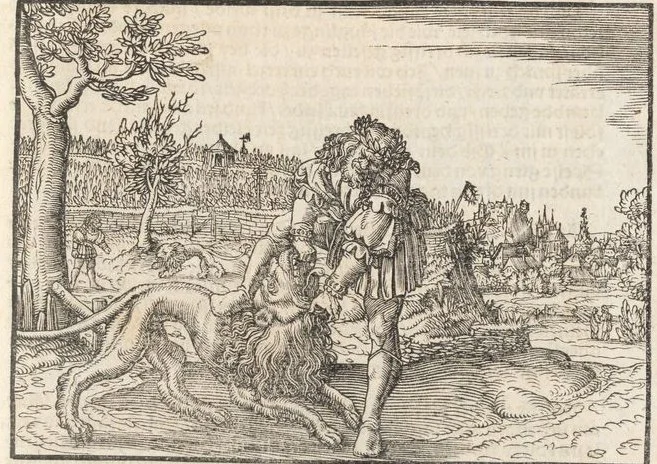
Abstract: This article presents a novel methodology for classifying early modern religious images by using Large Language Models (LLMs) and vector databases in combination with Retrieval-Augmented Generation (RAG). The approach leverages the full-page context of book illustrations from the Holy Roman Empire, allowing the LLM to generate detailed descriptions that incorporate both visual and textual elements. These descriptions are then matched to relevant Iconclass codes through a hybrid vector search. This method achieves 87% and 92% precision at five and four levels of classification, significantly outperforming traditional image and keyword-based searches. By employing full-page descriptions and RAG, the system enhances classification accuracy, offering a powerful tool for large-scale analysis of early modern visual archives. This interdisciplinary approach demonstrates the growing potential of LLMs and RAG in advancing research within art history and digital humanities.
Keywords: book history, protestant reformation, computer vision, digital humanities, iconclass, large-language models, vector database, semantic search, retrieval-augmented generation, information retrieval, early modern Europe, woodcuts, printing press, Martin Luther, bible illustrations

Written By: Cate Alexander
Abstract: Through a survey of four YouTube channels, I examine the use of AI to colourize, modernize, and add movement to historical paintings and photographs. My analysis of 19,984 scraped YouTube comments reveals how audiences discuss these (re)animations as “real” or “relatable,” facilitating affective reactions and relationships to historical figures. However, these AI programs homogenise, flatten, and add contrast to features based on the racialized and gendered norms established by their training data. The resulting altered portraits reinforce modern gender normativity and fetishization of whiteness — devaluing diversity and accuracy in digitally mediated public history in favour of a simulated intimacy with “attractive” bodies.
Keywords: GenAI, digital history, visual social media, content creation, beauty, digital ethnography, research-creation, image manipulation
Written By: Amina El Ganadi
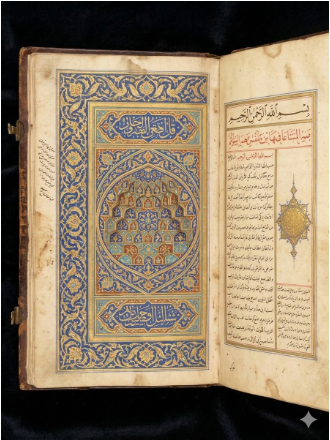
Abstract: Large language models (LLMs) are transforming the digital humanities by automating translation, summarisation, classification, and textual analysis at unprecedented scale. However, their fluency is often mistaken for genuine understanding, creating an illusion of knowledge that can mask unreliable factual grounding. This paper reframes the commonly used term “hallucination” as AI-induced error to emphasise the structural decoupling of linguistic plausibility from accuracy, a problem compounded by the limited interpretability of LLMs (the “black box” problem). The risk is especially acute in fields requiring textual precision, such as Islamic studies and Arabic digital librarianship, where distortions can affect interpretation, misrepresent doctrinal concepts, and undermine metadata reliability, with errors propagating into cataloguing systems and historical research. The paper analyses computational and epistemological factors that generate AI-induced errors, surveys mitigation approaches (retrieval-augmented generation, explainability methods, and domain-specific fine-tuning), and argues that technical safeguards are insufficient in isolation without human-in-the-loop oversight grounded in domain expertise. Drawing on practice-based evidence from the Digital Maktaba Project, it documents recurring error typologies encountered in real institutional workflows, including fabricated Islamic bibliographic categories, misidentification of foundational Islamic figures, fabricated hadith reports, and subject headings generated in unrelated languages. It concludes by advocating for transparent workflows, rigorous human involvement, and interdisciplinary collaboration among AI developers, domain experts, and humanities scholars as necessary conditions for responsible AI integration in culturally sensitive research contexts.
Keywords: AI-induced error, hallucination, large language models, illusion of knowledge, human-in-the-loop oversight, Islamic studies, Arabic digital librarianship, retrieval-augmented generation, Digital Maktaba Project.
Written By: Sophie Whittle
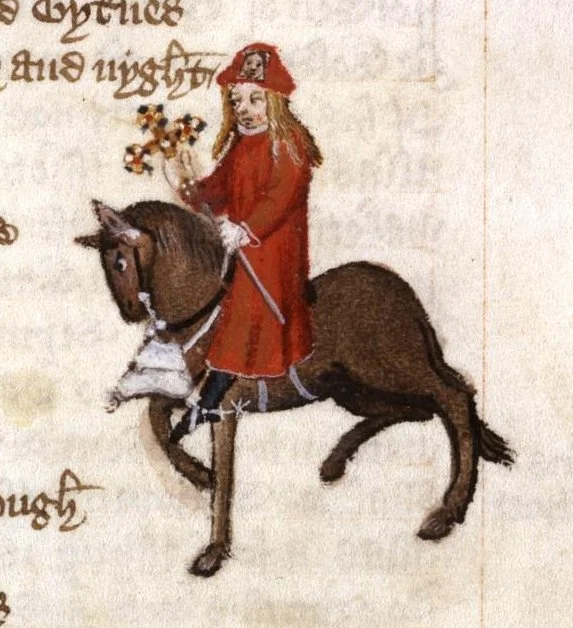
Abstract: Little is known about AI’s ability to generate and interpret issues of the distant past, especially as the topic of medieval public life is not a priority when producing new AI technologies. Yet there is recent hype around university students using generative AI to produce responses that might guide them in their degree programme. This case study analyses qualitative data from current students and teachers working on medieval history, language and literature, to understand the pedagogical principles guiding translations of works from the Middle Ages, and whether LLMs assist or hinder this process. It also discusses the development of an educational prototype interface of Geoffrey Chaucer’s Pardoner’s Prologue and Tale, and provides critical suggestions for the use of generative AI to investigate medieval texts, following the work of the AHRC/IRC-funded project C21 Editions. The paper concludes that the following endeavours must be accommodated in higher education contexts if generative AI is to be used for the study of Chaucer’s texts, themes and role in the literary canon: a) sufficient space to critically engage with and raise issues related to new technologies in the (digital) classroom; b) explorations of the evolving concepts and topics in Chaucer studies, discussing issues of sociohistorical injustice and marginalisation; and c) opportunities to bring together teaching and learning community insights via regular classroom-based activities. Such activities should incorporate discussion of LLMs’ ethical concerns and possibilities for increased collaboration and creativity during the process of producing accessible modern English translations.
Keywords: generative AI, higher education, digital classrooms, Chaucer, medieval studies, translation, collaboration, critical pedagogy
Written By: Edward A. S. Ross, Jackie Baines, Jacinta Hunter, Fleur McRitchie Pratt, & Nisha Patel
Abstract: As generative artificial intelligence tools (GenAI) are becoming more ingrained in everyday life, it is crucial that students and teachers become aware of the ethical considerations for using these tools. Furthermore, knowing these considerations, students need to understand the most effective way to use these tools to support their studies. This article discusses three major elements. First, our collaborative work with teachers and students in the Department of Classics at the University of Reading to inform staff and students about the ethical issues that surround AI training, development, and overuse. Second, our work creating an informational booklet for using GenAI in ancient language learning with guiding phrases, prompts which can be copy-pasted as the first message in a generative AI chat box to guide a user’s experience. Finally, an analysis of survey data gathered from ancient language students in the University of Reading over the 2023-2024 academic year. By providing students with up-to-date ethics information about GenAI tools and providing them with tailored guides for using them in a manner that directly supports their learning, ancient language students become the users that direct GenAI’s outputs for a critical purpose rather than simply relying on GenAI to give them accurate information.
Keywords: generative artificial intelligence (GenAI), ancient languages, ancient Greek, Latin, AI ethics, AI and higher education, student-teacher collaboration, classics, ChatGPT, Claude, Microsoft Copilot, Google Gemini
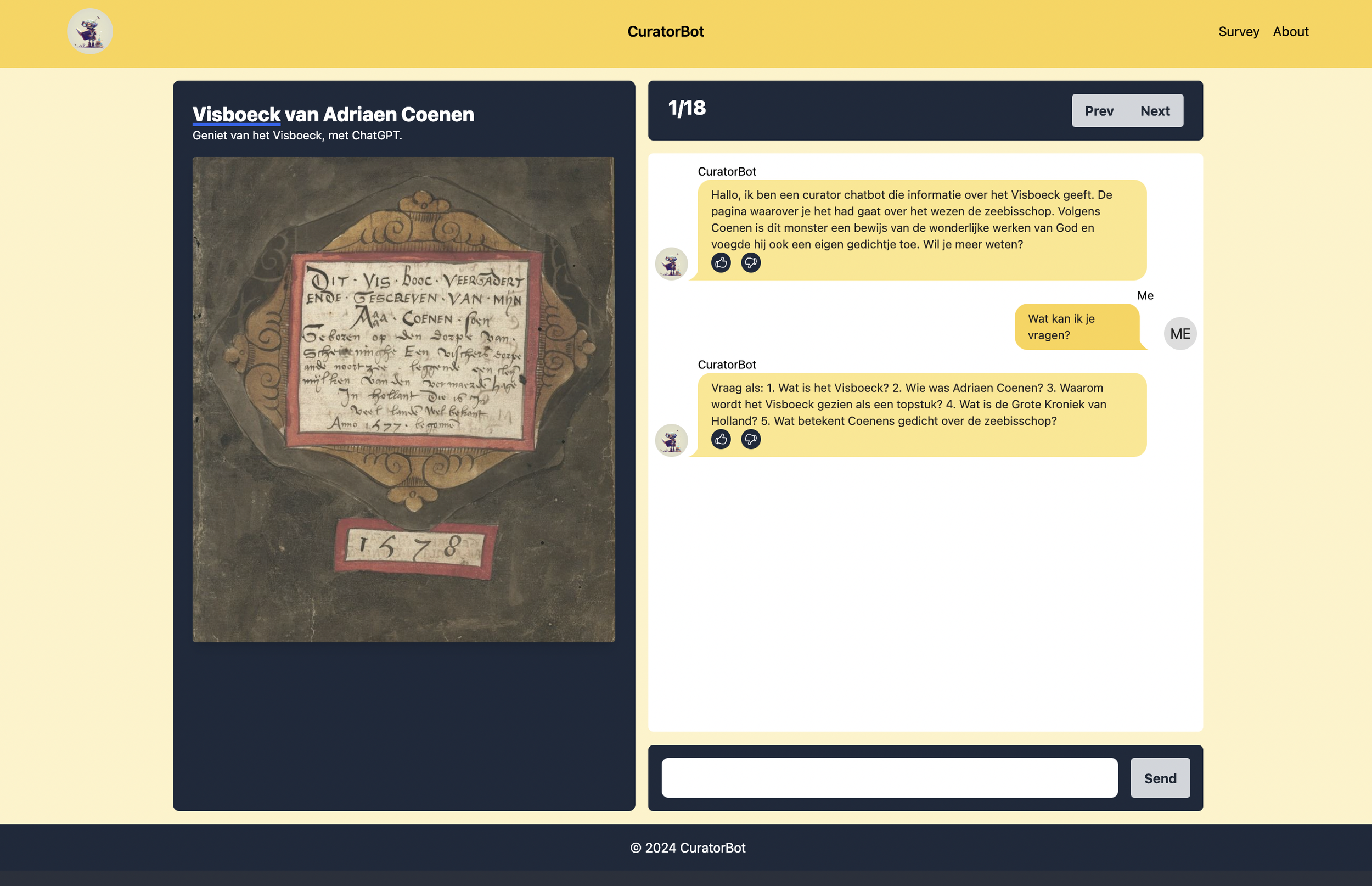
Written By: Heng Gu, Jeroen Vandommele and Jeffery Scott Love
Abstract: This paper explores the design and implementation of CuratorBot, an interactive chatbot developed to enhance visitor engagement in cultural heritage institutions using generative large language models. Positioned as a conversational guide, CuratorBot simulates a docent's role of enabling personalised, dynamic dialogues about historical artefacts, specifically focusing on the Dutch National Library's Visboeck manuscript. CuratorBot offers visitors the opportunity to actively interact with cultural heritage by having a conversation with a computer partner. Through iterative design experiments, user interaction observations and surveys, we assess the chatbot's capacity to foster curiosity, support free-choice learning and facilitate human-like conversations, thereby making cultural experiences more accessible and engaging for a broader audience. The development process involved continuous user feedback which highlighted key areas of improvement and adaptation to better serve visitor needs. The paper addresses opportunities and challenges of using LLM-based conversational agents in heritage settings and offers insights for future development of visitor engagement tools with embedded machine learning. We also discuss broader implications of incorporating generative conversational interfaces in GLAMs by examining how such tools can contribute to the evolving landscape of digital cultural heritage.
Keywords: Curiosity, Chatbots, Digital Heritage Design, Provotypes, Manuscripts
Introduction Written By: Mara Olivia
Guest Editors: Dr Mara Oliva, Dr Rachel Lewis, Dr Dominic Lees, Dr Jumbly Grindrod, Professor James Ferryman, Dr Bohni Batthacharya
Introduction to issue 16:3 - special issue exploring ‘Digital Humanities and Artificial Intelligence: Transformations, Challenges, and Critical Futures’